
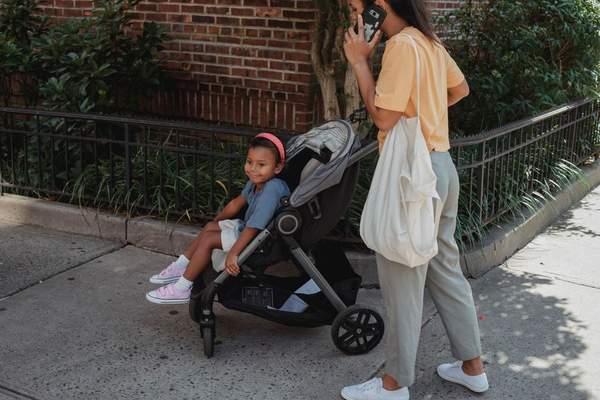
Choosing between a modular stroller and a traditional stroller sounds simple until you start comparing seats, bassinets, car-seat adapters, storage, fold size, and future family plans. The better choice is not automatically the model with the most attachments. It is the stroller that fits the way your family actually moves through ordinary days.
Modular systems are highly visible on 2026 baby registries because they promise flexibility from the newborn stage through toddlerhood, and sometimes beyond one child. Traditional strollers appeal for the opposite reason: they are often lighter and simpler.
What Is a Modular Stroller?
A modular stroller is built around a stroller frame that accepts different seating components or positions. Depending on the model, parents may be able to attach an infant car seat, bassinet, toddler seat, second seat, or riding board. Many also let the main seat face the parent or face forward.
The UPPAbaby Vista line is a well-known example. Its appeal comes from the ability to use different configurations as a child grows and, with compatible accessories, adapt the setup for siblings. Other brands describe similar products as a convertible stroller, single-to-double stroller, or travel system stroller.
“Modular” does not mean every component is included. A stroller may require separate purchases for a bassinet, second seat, adapters, or car seat. Compare the complete setup you expect to use rather than the frame price alone.
What Is a Traditional Stroller?
A traditional stroller usually has a fixed or less configurable seat attached to the frame. It may recline, fold, include a storage basket, and accept limited accessories, but its basic structure remains the same. This group includes many full-size single strollers and lightweight everyday models.
Traditional does not mean outdated. A good single stroller may offer excellent suspension, a generous canopy, useful recline, and a smooth push while avoiding multiple pieces.
Modular Stroller vs Traditional Stroller: Key Differences
Newborn Use
A modular system may offer a compatible bassinet or infant car seat for appointments and short transfers. However, an infant car seat should not become a routine sleep space outside the car. Follow each manufacturer’s age, weight, position, and attachment instructions.
A traditional stroller can also work from birth when the manufacturer approves its fully reclined seat or a newborn accessory. Do not assume that any reclining seat is automatically suitable for a newborn.
Flexibility as Your Family Changes
Modular strollers are strongest when your needs may change. A reversible seat can face a younger baby toward you and later face a toddler forward. A single-to-double design may help families planning children close in age avoid another stroller purchase.
Still, not every advertised configuration is equally practical. A second seat may have a lower weight limit, reduce basket access, or make the stroller harder to steer. Look at the exact arrangement you would use with your children, not simply the total number of possible modes.
Weight, Folding, and Storage
A traditional stroller is often easier to lift into a trunk, carry upstairs, or take on public transport. Fewer removable pieces can mean a quicker fold.
Modular models are commonly heavier because the frame must support multiple components. Measure your trunk opening and home storage area instead of relying only on listed folded dimensions.
Cost
Traditional strollers often have the lower total cost when you need one seat. Modular systems can provide long-term value, but only when you use the flexibility you are paying for.
Calculate the full package: frame, main seat, bassinet, infant car-seat adapter, second seat, rain cover, cup holder, and riding board. A premium convertible stroller can become significantly more expensive once the preferred configuration is complete.
Everyday Convenience
Think about repeated actions. Will you remove a bassinet before folding? Can you reach the basket with two seats installed? Does the car seat click directly into the stroller frame, or require adapters that could be left at home? Traditional strollers usually win on simplicity. Modular strollers win when switching modes solves a genuine daily problem.
A Real-World Buying Scenario
Imagine one family expecting a second baby within two years. They take long neighborhood walks, drive a roomy vehicle, and have ground-floor storage. A modular stroller makes sense because the extra weight is manageable and a future second-seat option may prevent another major purchase.
Another family lives in an upstairs apartment, uses buses, owns a small hatchback, and plans to use a baby carrier for many newborn outings. A lighter traditional stroller may be far more useful, even though it offers fewer configurations.
Test with realistic weight before buying. Put a loaded diaper bag in the basket, fold the stroller, lift it to trunk height, and turn it through a narrow aisle. It should still feel manageable when you are tired.
Which Stroller Should You Buy?
Choose a modular stroller when you value a parent-facing seat, bassinet compatibility, travel system convenience, or a realistic path from one child to two. It also suits families who walk frequently and have enough storage for extra components.
Choose a traditional stroller when low weight, a fast fold, compact storage, and straightforward operation matter more than future configurations. It is often the smarter option when you already know you will use only one seat.
Related reading such as a baby registry checklist, infant car seat safety basics, and essential newborn gear can help you coordinate the stroller with other major purchases.
Safety Features Matter More Than Stroller Type
Look for a stable base, reliable brakes, secure folding latches, and a five-point harness. Use the harness every ride, engage the brake whenever stopped, and avoid hanging heavy bags from the handle because this can affect stability.
Confirm that every seat, bassinet, adapter, and car seat is approved for that exact stroller model. Register the product and check current recall information, especially when buying used. A premium name or flexible design does not replace correct assembly and safe use.
Frequently Asked Questions
Is a modular stroller the same as a travel system stroller?
Not always. A travel system stroller works with an infant car seat, while a modular stroller may support several seat types, directions, or sibling configurations. Many products fit both descriptions.
Are modular strollers worth the extra cost?
They can be when you will use a bassinet, reversible seat, or second-child setup. They offer less value when the extra attachments remain stored and you mainly need a lightweight single stroller.
Can a traditional stroller be used from birth?
Some can, but only when the manufacturer specifically approves the seat or accessory for newborn use. Check the minimum age and weight guidance rather than relying on appearance.
Is the UPPAbaby Vista right for every family?
No. It is a useful example of a premium modular system, but its size, weight, configuration costs, and storage needs may not suit frequent stairs, small vehicles, or limited storage.
Final Verdict
The modular stroller vs traditional stroller decision comes down to useful flexibility versus everyday simplicity. Modular systems are compelling for growing families and parents who genuinely need multiple modes. Traditional strollers are often better for portability, quick folding, and uncomplicated daily use. Buy for the routine you will repeat every week, not for the maximum number of configurations shown in a product photo.