
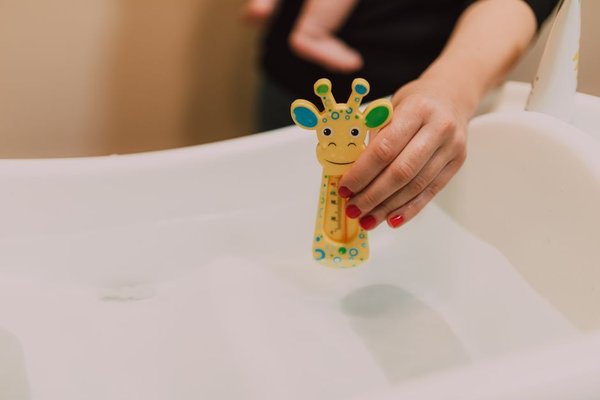
A newborn bath does not need to be hot to feel soothing. The safest approach is to keep the water comfortably warm and close to body temperature. A practical target for newborn bath temperature is about 37–38°C (98.6–100.4°F). This range is warm enough to help your baby stay comfortable without making the bath unnecessarily hot.
The exact number matters less than avoiding extremes. Babies lose heat quickly, and water that feels mildly hot to an adult can be too warm for an infant. A quick temperature check before every bath makes bath time safer and less stressful.
What Is the Best Newborn Bath Temperature?
Aim for bath water that feels pleasantly warm rather than hot, ideally around 37–38°C. This is close to body temperature and is commonly used in newborn-care guidance. If you use a baby bath thermometer, check the reading after mixing the water thoroughly so you are not measuring a temporary hot or cold pocket.
You do not need to chase an exact decimal reading. A thermometer is helpful, especially during the first few baths, but it should support rather than replace a physical check. Dip the inside of your wrist or your elbow into the water. Safe bath water should feel comfortably warm with no sharp sensation of heat.
Why Newborn Bath Water Temperature Matters
Newborns are less able than older children and adults to regulate body temperature. A bath that is too cool can make a baby chilled, while overly hot water can cause discomfort or scalding. Because newborn skin is delicate, preventing excessive heat is especially important.
The American Academy of Pediatrics recommends keeping the hottest water available at household faucets at no more than 120°F (48.9°C) to reduce tap-water scald risk. That is a household safety limit, not a target bath temperature. The water in the baby bath itself should be much cooler and should feel warm, not hot.
How to Check the Water Before Putting Your Baby In
Mix the Water Thoroughly
Hot and cold water can settle unevenly, especially if water has just been added. Swirl the water with your hand before testing it, then check more than one area so there are no unexpectedly hot spots.
Use Your Wrist or Elbow
Your fingers are used to handling warmer temperatures, so they are not the best guide. The inside of your wrist or elbow is more sensitive. If the water feels hot there, let it cool before your baby goes in.
Use a Baby Bath Thermometer if It Helps
A baby bath thermometer can make the first few weeks easier because it gives you a repeatable reference point. Look for a reading around 37–38°C, but still check the water yourself. Thermometers can be slow to respond or affected by where they are sitting in the tub.
A Simple Real-World Bath-Time Routine
Imagine you have filled a small infant tub and the thermometer reads 38°C. Before undressing your baby, swirl the water, test it with your elbow, and make sure the room is comfortably warm. Place a towel, clean nappy, and clothes within reach. Then bring your baby to the bath rather than leaving them exposed while you gather supplies.
If the water has cooled noticeably, do not pour hot water into the tub while your baby is sitting in it. Remove your baby before adjusting the water, remix it thoroughly, and test it again. This simple habit prevents sudden temperature changes and concentrated hot spots.
Keep the Bath Comfortable From Start to Finish
Temperature is only one part of newborn bathing safety. Keep the bath brief, support your baby’s head and neck, and maintain hands-on supervision throughout. Never leave a baby alone in bath water, even for a moment.
Have everything within arm’s reach before you begin. A wet newborn can become slippery quickly, so keep a secure hold. When the bath is finished, wrap your baby in a dry towel promptly and pat the skin dry.
Should You Add Hot Water During the Bath?
It is safer not to add hot water while your baby is in the tub. Water from the tap can be far hotter than the finished bath and may create a hot area before it mixes. If the bath becomes too cool, end the bath or remove your baby before adjusting the water.
If you are bathing in a sink, turn off the faucet before placing your baby in the water. Running water can change temperature unexpectedly, making a prepared, mixed bath easier to control.
What About the First Bath and the Umbilical Cord?
Many newborns begin with sponge baths rather than being placed in a tub. The American Academy of Pediatrics recommends sponge bathing until the umbilical cord stump has fallen off and the area has healed. Use comfortably warm water, keep your baby wrapped where possible, and uncover only the area you are washing.
You also do not need to bathe a newborn every day. A few baths per week are often enough, with the face, neck folds, hands, and nappy area cleaned as needed between baths. For related guidance, useful next reads include our newborn bath guide, how often to bathe a newborn, and newborn skincare basics.
Common Temperature Mistakes to Avoid
Do not judge the water only with your hand, assume yesterday’s tap settings will produce the same temperature, or put your baby into the tub before mixing the water. Do not rely entirely on a thermometer without checking the water physically.
If your baby becomes unusually red, seems distressed, shivers, or feels cold, end the bath and dry and warm them. If you are concerned about a burn, abnormal body temperature, or your newborn’s health, seek medical advice promptly.
FAQ
Is 40°C too hot for a newborn bath?
For routine newborn bathing, 40°C (104°F) is warmer than the usual target. Aim closer to 37–38°C and confirm that the water feels warm, not hot, on your wrist or elbow.
Can I test newborn bath water with my hand?
You can, but your wrist or elbow is a better test area because it is more sensitive to heat. A bath thermometer can provide an extra check.
What temperature should a baby bath thermometer show?
A practical target is around 37–38°C (98.6–100.4°F). Mix the water first and check the reading in more than one area if needed.
How do I stop my newborn getting cold during a bath?
Warm the room, prepare supplies in advance, keep the bath short, and wrap your baby in a dry towel immediately afterward. During sponge baths, keep most of the body covered while washing one area at a time.
A Calm, Repeatable Temperature Check Is Enough
Safe newborn bath temperature does not require complicated equipment. Prepare the bath before bringing your baby over, mix the water well, aim for about 37–38°C, and confirm that it feels comfortably warm on your wrist or elbow. With your supplies ready and one hand on your baby throughout the bath, that simple routine makes temperature checking an easy part of newborn bathing safety.