
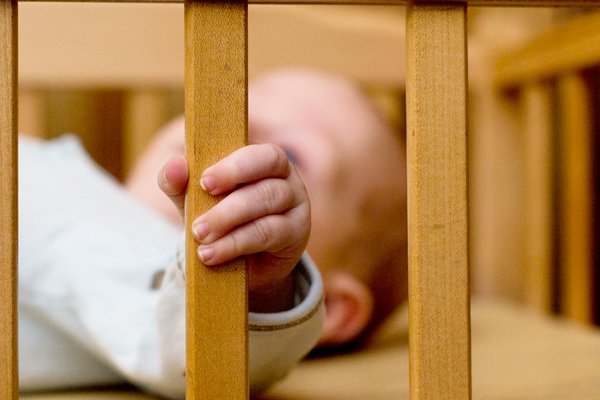
A crib can look properly assembled and still hide a problem: a mattress gap, loose bracket, or curtain cord within reach. A useful crib safety checklist examines the entire sleep space, not just the frame. And it needs updating when your baby starts sitting, standing, and climbing.
Use these checks during assembly, whenever you rearrange the nursery, and as your child grows.
Start With a Safe, Complete Crib
Check the model, manual, and recalls
Choose a crib meeting current U.S. Consumer Product Safety Commission (CPSC) standards. Check the manufacturer and model number against CPSC recalls, particularly for secondhand cribs. Do not use older drop-side cribs. If instructions are missing, obtain the correct manual rather than guessing how parts fit.
A hand-me-down can look sturdy yet have outdated construction or missing hardware. If its identity, safety status, or complete parts cannot be confirmed, choose another crib.
Examine slats, panels, and hardware
For a safe crib setup, slats must be intact and spaced no more than 2 3/8 inches (6 cm) apart. Avoid headboards and footboards with decorative cutouts that could trap a child’s head, or dangerous protruding corner posts. Check accessible surfaces for splinters, sharp edges, and peeling paint.
Inspect screws, brackets, mattress supports, and joints. Nothing should be loose, cracked, missing, or installed incorrectly. Never substitute household hardware or improvise repairs. Use manufacturer-approved parts, and stop using a damaged crib until it is properly repaired or replaced.
Check the Mattress Fit and Surface
Look for gaps on every side
Crib mattress safety requires a firm, flat mattress intended for that particular crib. Push it gently to one side and inspect the space along the opposite edge. The American Academy of Pediatrics (AAP) advises against a crib-and-mattress combination if more than two fingers fit between the mattress and the side or end.
For example, a mattress advertised as a universal fit might sit loosely in a compact convertible crib. A smooth fitted sheet does not eliminate an entrapment gap underneath. Match mattress dimensions to the crib manufacturer’s specifications, and avoid extra mattresses or toppers.
Keep it firm, flat, and uncluttered
The mattress should not sink deeply under pressure. Use a single snug fitted sheet designed for its size; remove all plastic packaging. Do not add wedges, sleep positioners, rolled towels, pillows, or extra padding, even when advertised for reflux. These products can create suffocation or entrapment hazards.
When comparing essentials, choosing a safe crib mattress is a useful related topic, but an expensive mattress is not automatically safer than a properly fitting compliant one.
Leave the Crib Empty During Sleep
The AAP recommends putting babies on their backs for every sleep on a firm, flat, non-inclined surface. The crib should contain only the baby and a correctly fitted sheet over the mattress. Remove loose blankets, quilts, pillows, stuffed animals, bumper pads, and mesh liners. A decorated nursery photograph is not a safe-sleep instruction sheet.
For warmth, consider an appropriately sized, non-weighted wearable blanket instead of loose bedding. Dress your baby for the room temperature, avoid overheating, and leave the head uncovered. Safe sleep basics for newborns explains how these habits work together with back sleeping.
Choose Nursery Crib Placement Carefully
Stay clear of windows and reachable cords
Nursery crib placement matters as much as what is inside the crib. Keep it away from windows, blinds, curtain cords, electrical cables, monitor wires, and lamps. Cordless window coverings are preferable. A cord that is unreachable to a newborn may be within reach of a standing baby months later.
Keep heavy wall decorations and shelves from falling into the crib. Do not place chairs, dressers, or other potential climbing aids beside it. Anchor tall furniture securely to prevent tip-overs, even when it feels heavy.
Plan a separate space for early room-sharing
The AAP recommends room-sharing without bed-sharing for at least the first six months. A standards-compliant crib, bassinet, or play yard can be placed in the parents’ room, with its own separate sleep surface. Make sure adult bedding cannot spill into it. Never remove crib sides to improvise a bedside sleeper.
Update the Crib as Your Baby Becomes Mobile
Crib safety checks must change with development. Lower the mattress before sitting or pulling up creates a fall risk, and set it to its lowest permitted level before your baby can stand. Follow your crib’s assembly instructions and height settings rather than estimating.
Remove mobiles and hanging toys once your baby can push up on hands and knees, or sooner if the product requires. Once a child can climb out, the crib is no longer a safe containment space. Respect the manufacturer’s height limit; AAP guidance commonly identifies 35 inches (89 cm) as a point to transition away from crib use.
When the time comes, choose an age-appropriate bed and secure the room for an independently mobile child. A nursery babyproofing checklist can help identify hazards beyond the crib.
A Quick Check Before Each Sleep
A two-minute inspection catches hazards that appear during everyday life. First, confirm that only the fitted sheet remains inside. Then check that the sheet is secure and the mattress still lies flat without unusual gaps. Look around the crib: has someone moved a charging cable, storage basket, or chair close enough to reach? Finally, reconsider whether the mattress height suits your baby’s newest skills.
Inspect the frame and hardware more thoroughly after assembly, moving, or converting the crib, and regularly afterward. The AAP suggests inspecting for loose parts or damage weekly. If a concern arises, use another compliant sleep space until it is resolved.
Frequently Asked Questions
How snug should a crib mattress be?
It should fit tightly against all sides. If more than two fingers fit into a gap, do not use that combination. Check the crib manufacturer’s specified mattress dimensions.
Can I use a secondhand crib?
Yes, but only if its model can be identified, it meets applicable standards, has not been recalled, and includes all required undamaged parts and instructions. Avoid drop-side models.
Are mesh bumpers safer than padded crib bumpers?
No. The AAP recommends leaving bumpers and liners out of the crib. They are unnecessary and may introduce entrapment or strangulation hazards.
When should the mattress be lowered?
Lower it as your baby becomes more mobile, before sitting or standing creates a fall risk. Use the lowest manufacturer-approved position before your baby stands.
Keep the Checklist Current
A safe crib depends on four things working together: a sound frame, a snug firm mattress, an empty sleep space, and placement away from outside hazards. Review those details after room changes and each developmental milestone. Fixing a potential problem before your baby can reach it is the point of this checklist.