
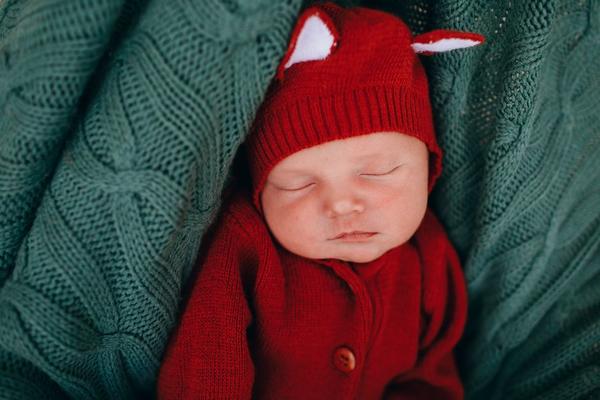
Newborn sleep can feel unpredictable. One day your baby may seem to sleep almost constantly, while the next brings short naps, frequent feeds, and awake periods at inconvenient hours. That uneven pattern is usually part of early newborn life rather than a sign that anything is wrong.
Most newborns spend a large part of each 24-hour day asleep. A common reference range for babies from birth to about 3 months is roughly 14 to 17 hours of sleep in 24 hours, although individual babies may sleep more or less. Those hours are rarely grouped into one long nighttime stretch. Newborn sleep is usually scattered across the day and night.
How Many Hours Do Newborns Sleep in 24 Hours?
When parents ask how much newborn sleep is normal, it helps to think in terms of a full 24-hour period rather than nighttime alone. Many newborns sleep around 14 to 17 hours total, and the American Academy of Pediatrics notes that newborns often sleep about 16 to 17 hours a day. There is still plenty of normal variation from one baby to another.
A baby who sleeps 15 hours in a day may not look as though they are sleeping that much because the total is divided into newborn naps and nighttime stretches. A two-hour nap, a feed, another hour of sleep, and several shorter naps can add up quickly. Total sleep and overall wellbeing matter more than matching another baby’s timetable.
Why Newborn Sleep Comes in Short Stretches
Newborn sleeping patterns are very different from adult sleep. In the first months, babies do not yet have a mature day-night body clock, so they are not naturally prepared to save most of their sleep for nighttime. Their sleep and waking are also strongly influenced by feeding.
The American Academy of Pediatrics explains that newborns may sleep for only one or two hours at a time. Some stretches will be longer and others much shorter. A baby may wake, feed, stay alert briefly, then fall asleep again without following a predictable clock-based pattern.
Feeding needs are a major reason for frequent wake-ups. In the early weeks, breastfed newborns commonly feed 8 to 12 times in 24 hours, and formula-fed newborns also feed frequently. This naturally breaks sleep into smaller pieces.
What Day and Night May Look Like
Parents often expect daytime naps and a longer nighttime sleep, but newborns may temporarily have the opposite pattern. A baby can sleep peacefully through much of the afternoon and then wake repeatedly overnight because the biological rhythms that organize sleep around daylight and darkness are still developing.
During the day, normal household light and activity can signal daytime. At night, keeping feeds and changes calm, quiet, and low-stimulation can reinforce the contrast. These cues are not a strict schedule; they simply support developing day-and-night patterns.
For example, a two-week-old might sleep from 9:00 to 10:30 a.m., again from noon to 2:00 p.m., take several shorter naps later, and then wake every two or three hours overnight to feed. That can feel like broken sleep to the parents, yet the baby’s total newborn sleep hours across the full day may still be substantial.
How Feeding Changes the Sleep Picture
A long sleep stretch is not automatically the goal in the earliest weeks. Young newborns need frequent opportunities to feed, and some sleepy babies may need to be awakened for feeds, particularly before feeding and weight gain are well established. Advice can vary with age, birth history, feeding method, weight gain, and medical needs.
If your baby is very young, follow the feeding plan given by your pediatrician or maternity team rather than trying to extend sleep. Once a baby is feeding effectively and gaining weight appropriately, a clinician may give different guidance about waking for feeds.
A practical way to understand the pattern is to track feeding and sleep together for a day or two. You may notice that what looks like random waking actually clusters around hunger. This can make frequent newborn naps easier to interpret.
Should You Put a Newborn on a Sleep Schedule?
For most newborns, a rigid clock-based schedule is unrealistic. Early sleep is driven more by biological needs than household routines. Rather than aiming for exact nap times, observe your baby’s natural pattern and make sure feeding needs are being met.
Predictability develops gradually. As babies grow, they spend longer periods awake during the day and may sleep for longer stretches at night. Progress is better measured over weeks than from one night to the next.
For related reading, newborn feeding frequency, newborn sleep cues, and safe infant sleep are useful topics to explore separately. Keeping them distinct makes it easier to understand normal sleep duration without turning every nap into a schedule problem.
When Extra Sleepiness Deserves a Call to the Pediatrician
Some newborns are naturally sleepier than others, but sleep should not prevent a baby from feeding adequately. Contact your pediatrician or another qualified healthcare professional if your newborn is unusually difficult to wake for feeds, repeatedly misses feeds, seems too sleepy to feed effectively, has noticeably fewer wet diapers than expected, or you are concerned about weight gain or jaundice.
What matters is whether sleep fits alongside normal feeding, hydration, growth, and periods of alertness. If your baby’s pattern changes suddenly or seems markedly different, seek professional advice rather than relying on an online average.
Frequently Asked Questions
Is it normal for a newborn to sleep most of the day?
Yes. Newborns often spend more time asleep than awake. Total sleep is commonly around 14 to 17 hours in 24 hours, but normal variation is wide. Feeding, growth, diaper output, and how the baby behaves when awake provide important context.
How long should a newborn sleep at one time?
Many newborn sleep periods are short, often around one or two hours, although some stretches can be longer. Frequent waking is expected because newborns need regular feeds and do not yet have mature day-night sleep rhythms.
Why does my newborn sleep more during the day than at night?
Newborns have not fully developed the internal clock that helps older babies and adults organize sleep around night and wakefulness around day. Day-night confusion is common early on and usually changes gradually as the baby’s circadian rhythm develops.
Should I wake my newborn to feed?
Some newborns need to be awakened for feeds, especially in the early weeks or when weight gain is still being established. Feeding recommendations depend on the individual baby, so follow the advice of your pediatrician or newborn care team rather than extending sleep simply to create a longer stretch.
The Bottom Line
Newborn sleep is best understood as a 24-hour total made up of many small pieces. Many babies sleep roughly 14 to 17 hours a day, but the pattern can be irregular, with newborn naps and nighttime sleep spread across feeding cycles. Short stretches, repeated waking, and mixed-up days and nights are common during this stage.
Instead of chasing a perfect schedule, watch the broader pattern: sleep, feeds, growth, diaper output, and alert periods. Over time, sleep becomes more organized. During the newborn weeks, realistic expectations can make the pattern clearer.